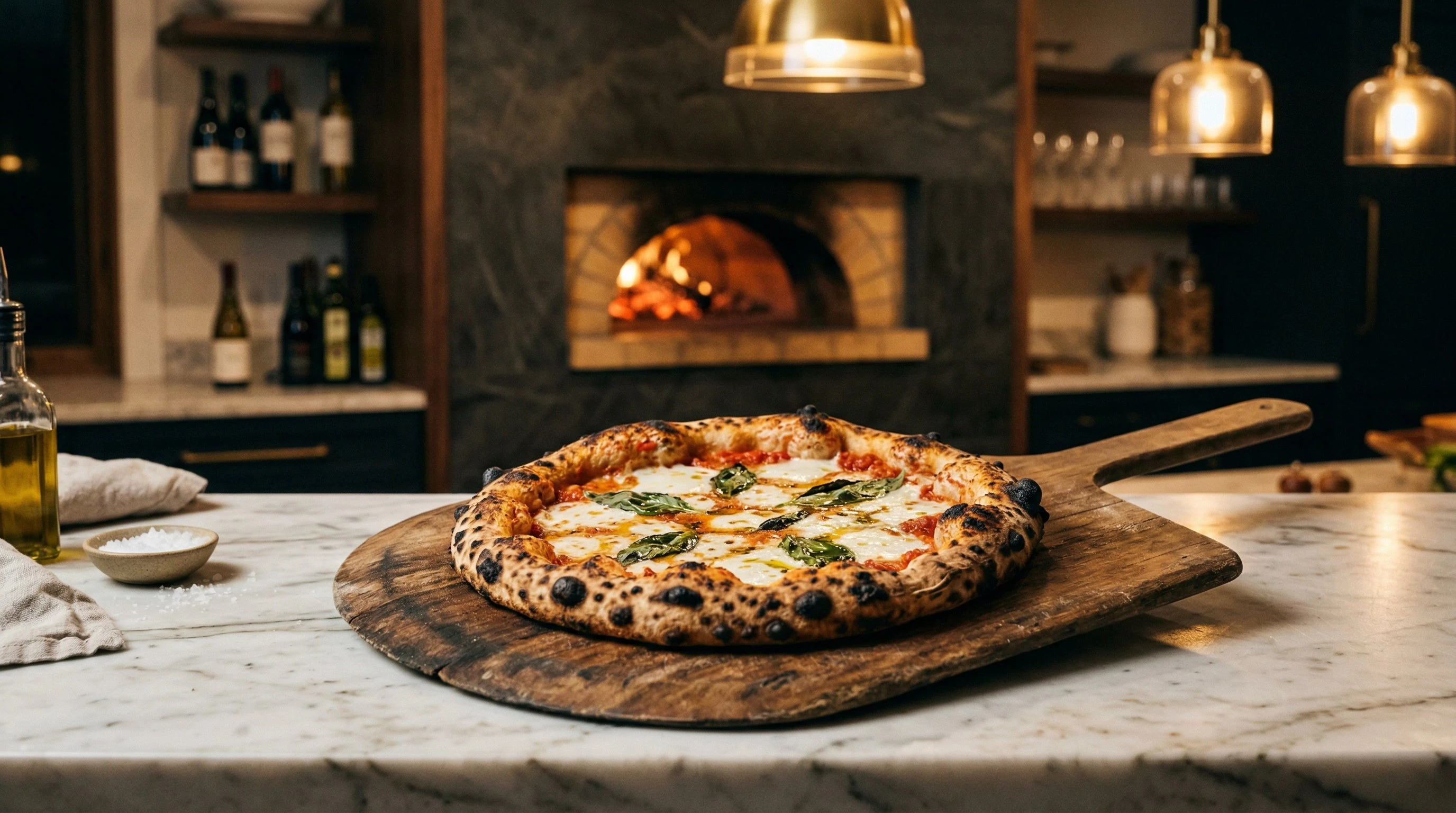
Of all the pizza styles a home baker can chase, Neapolitan is the one that creates the most obsession and the most frustration. People spend years trying to replicate it. They buy specialized flour, import San Marzano tomatoes, install wood-fired ovens in their backyards. They get close, occasionally nail it, and then spend the next six months trying to figure out why they can’t repeat it.
This guide covers why Neapolitan is the way it is, what makes it technically demanding, and what actually matters when you’re making it at home.
Where It Comes From
Neapolitan pizza is from Naples, Italy — specifically from the pizzerias that have been making it the same way for over 200 years. The Associazione Verace Pizza Napoletana, founded in 1984, codified the rules that define it: specific flour (type 00), specific tomatoes (San Marzano DOP), specific mozzarella (fior di latte or buffalo mozzarella), specific hydration range (55-65%), specific bake temp (485°C / 905°F minimum), and a bake time of 60-90 seconds.
That’s not arbitrary. Every element of the spec exists because of what a wood-fired oven at 900°F does to dough. The high hydration creates steam that inflates the cornicione. The 00 flour’s lower protein content produces a more extensible, tender crumb. The short bake time means the interior stays soft and slightly wet while the exterior chars. You can’t separate the ingredient list from the heat source — they’re designed as a system.
The problem for home bakers: almost nobody has a wood-fired oven hitting 900°F.
What Defines the Style
The cornicione. That puffed, charred, airy rim is the signature of a true Neapolitan. It should be leopard-spotted — dark char patches over a golden base — and when you break it open, there should be a large, irregular air pocket inside. Getting this at home requires high heat, proper fermentation, and correct shaping.
The interior. The center of a Neapolitan is wet. Not raw — wet. The sauce and cheese meld into the crumb, creating a soft, almost soupy center. This is called the \"wet center\" and it’s considered a feature, not a flaw. First-timers often think they underbaked when they actually nailed it.
The bottom. Charred but not burnt. The bottom should have dark, irregular spots from the oven floor or steel. It should hold its shape when you pick it up — not flop, but not rigid either. There’s a specific flex that signals correct bake.
The crust. Soft, tender, light. Neapolitan dough is not chewy. It’s not breadlike. It should tear easily and almost melt in your mouth. This comes from the 00 flour and high hydration working together with long cold fermentation.
The Home Baker’s Neapolitan Challenge
The oven problem. Household ovens max out around 550°F. That’s 350°F short of what Neapolitan was designed for. The result: longer bake time, which means the interior dries out before the exterior chars, which means you can’t get the wet center and leopard char simultaneously. The workaround is a baking steel preheated as long as possible, positioned on the top rack closest to the broiler. Some home bakers finish under the broiler for the last 90 seconds to get top char. An Ooni or similar outdoor pizza oven solves this completely — they hit 900°F.
The shaping problem. Neapolitan dough is extensible and slack. It’s meant to be hand-stretched, never rolled. Rolling presses out the gas bubbles from fermentation and flattens the cornicione. Stretching requires practice — you’re working with a dough that wants to tear if you push too fast and wants to spring back if you push too slow. The technique: start from the center and press outward with your fingers, leaving a 1-inch border untouched. Then drape it over your knuckles and let gravity stretch it.
The fermentation problem. Neapolitan flavor comes almost entirely from the fermentation, not the ingredients. A 24-hour room temp ferment tastes completely different from a 48-hour cold ferment. Most home bakers don’t give their dough enough time, or they ferment at the wrong temperature, or they ball the dough at the wrong point in fermentation. Getting the timing right is what separates a bland crust from one with complex, slightly tangy flavor.
What Actually Matters at Home
Get the oven as hot as it will go. Preheat your steel or stone for 45-60 minutes minimum. Use the broiler at the end if you need top char. An Ooni changes the equation entirely.
Use 00 flour. All-purpose and bread flour produce noticeably different texture. Caputo 00 is available at most specialty grocery stores and online. It’s not expensive.
Give it time. Minimum 24 hours. 48-72 hours cold ferment is where the flavor lives. Mix your dough the day before at the absolute minimum.
Don’t roll it. Hand-stretch only. If it keeps springing back, the gluten needs more rest. Cover it and wait 10 minutes.
Sauce goes on thin. Neapolitan sauce is raw, crushed San Marzano tomatoes with salt. Nothing cooked. Spread it thin — you want to see the dough through it in places. Less is more.
Weigh everything. Neapolitan dough hydration is typically 60-65%. At that hydration, the difference between 60% and 65% is significant. You can’t measure that accurately with cups.
Building Consistency
Neapolitan is a style that rewards iteration more than most. The first time you make it, you’re learning the dough. The second time, you’re learning the shaping. The third time, you’re learning your oven. By the fifth or sixth time, if you’ve been tracking what you did, you start to understand the system.
The Pie Lab’s Neapolitan preset in the dough calculator gives you exact gram measurements for your batch at the right hydration. The scheduler builds your fermentation timeline backward from when you want to eat. The bake journal stores your photo, your notes, and a full dough snapshot so you can compare bakes and see what changed.
It’s the systematic approach that gets you to consistent Neapolitan faster than trial and error alone.
Try it free for 14 days at pielab.app. No credit card, no account required.